

Historical Figure
Ulysses S. Grant
1822–1885
Civil War general, U.S. president from 1869 to 1877
Talk to Ulysses S. Grant
Have a conversation with this historical figure through AI
Biography
Ulysses S. Grant was the 18th president of the United States, serving from 1869 to 1877. He previously led the Union Army to victory in the American Civil War in 1865 as commanding general.
In Their Own Words (5)
You can violate the law. The banks may violate the law and be sustained in doing so. But the President of the United States cannot violate the law.
Reply to brokers who urged him to lend $44 million from the U.S. Treasury reserve to banks. Harper's Weekly (11 October 1873) , 1873
God gave us Lincoln and Liberty, let us fight for both.
A toast made by Grant before his operations in the Vicksburg Campaign, (22 February 1863); as quoted in A Popular and Authentic Life of Ulysses S. Grant (1868) by Edward Deering Mansfield , 1868
I don't know why black skin may not cover a true heart as well as a white one.
Reportedly said to a neighbor in 1856, as quoted in A Personal History of Ulysses S. Grant (1868), by Albert Deane Richardson, Hartford, Connecticut: American Publishing Company, p. 155. According to some other sources, he had also used this phrase in a letter to Robert E. Lee (General of the Confederacy's armies) , 1868
Wars produce many stories of fiction, some of which are told until they are believed to be true.
Ch. 67 , 1885
Although a soldier by profession, I have never felt any sort of fondness for war, and I have never advocated it, except as a means of peace.
Speech in London, as quoted in Memorial Life of Gen. Ulysses S. Grant (1889) Edited by y Stephen Merrill Allen, p. 95 , 1889
Timeline
The story of Ulysses S. Grant, told in moments.
Born Hiram Ulysses Grant in Point Pleasant, Ohio. His father runs a tannery. Ulysses hates the smell of blood so much he can never eat rare meat for the rest of his life. He's quiet, short, and good with horses.
Graduates from West Point ranked 21st out of 39 cadets. He excels in horsemanship and mathematics, nothing else. His name is entered as "U.S. Grant" by mistake. He keeps it.
Resigns from the Army at 32. He's stationed on the Pacific coast, separated from his wife and children. Rumors of heavy drinking follow him. He tries farming, fails. Tries selling real estate, fails. By 1860 he's clerking in his father's leather shop in Galena, Illinois.
Captures Fort Donelson in Tennessee, demanding unconditional surrender. It's the Union's first major victory. The initials U.S. suddenly stand for "Unconditional Surrender" Grant. Lincoln notices.
Accepts the surrender of Vicksburg after a 47-day siege. The Confederacy is split in two. The Mississippi River belongs to the Union. Lincoln writes: "Grant is my man, and I am his the rest of the war."
Robert E. Lee surrenders at Appomattox Court House. Grant arrives in a mud-spattered uniform. Lee wears his finest dress coat with a jeweled sword. Grant's terms are generous. Confederate soldiers can keep their horses for spring planting. Officers keep their sidearms.
Elected president at 46, the youngest to that point. He wins Black voters' support by enforcing the Reconstruction amendments and breaking the Ku Klux Klan with federal troops. During his two terms, 15 African Americans serve in Congress for the first time.
Dies of throat cancer at a cottage in Mount McGregor, New York. He's 63. He spent his final year writing his Personal Memoirs while terminally ill, racing the cancer. Mark Twain published them. The book earned his widow $450,000 and is still considered one of the finest military autobiographies written in English.
Artifacts (15)
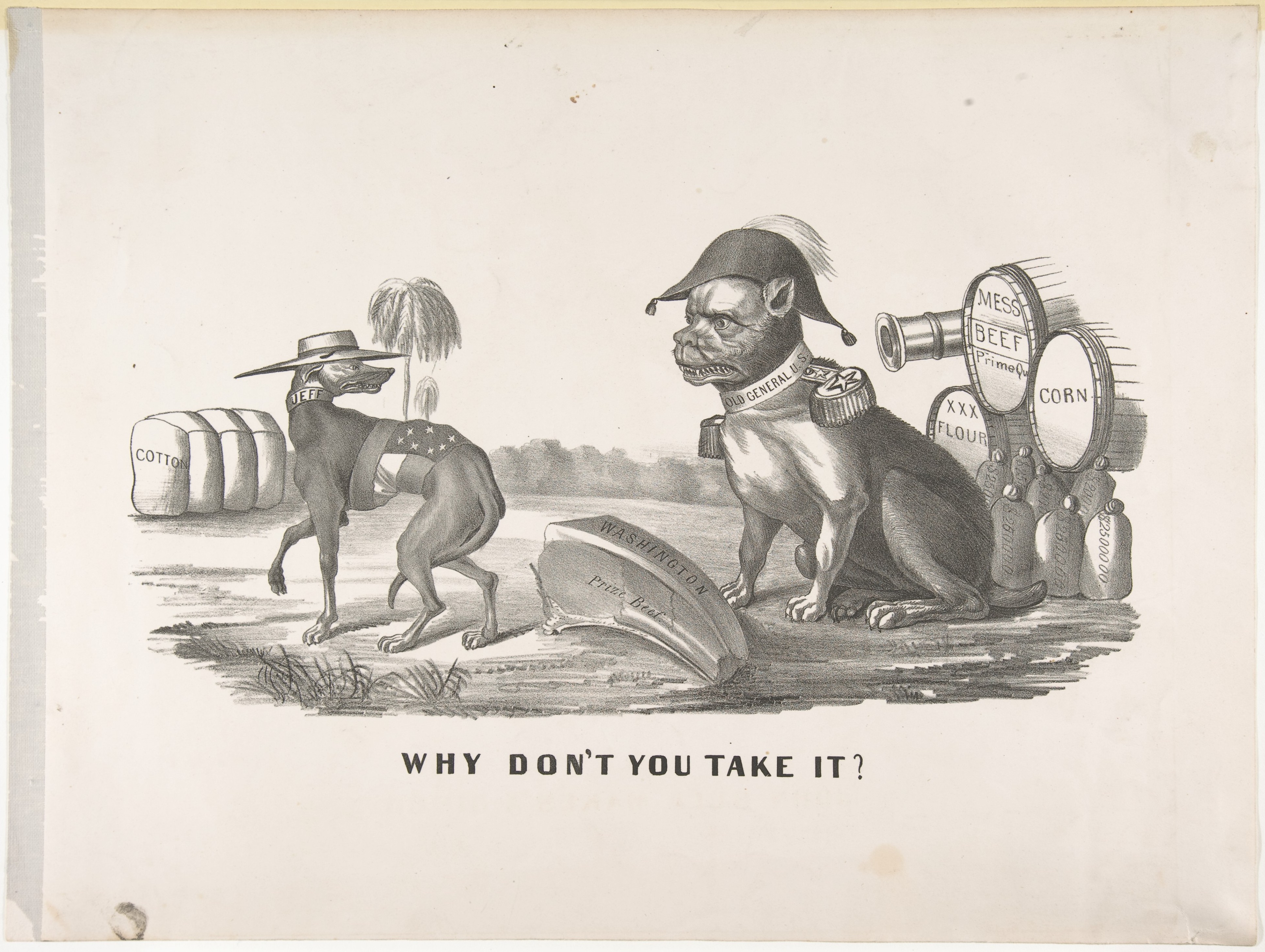
Why Don't You Take It?
Currier & Ives|Jefferson Davis|Ulysses S. Grant
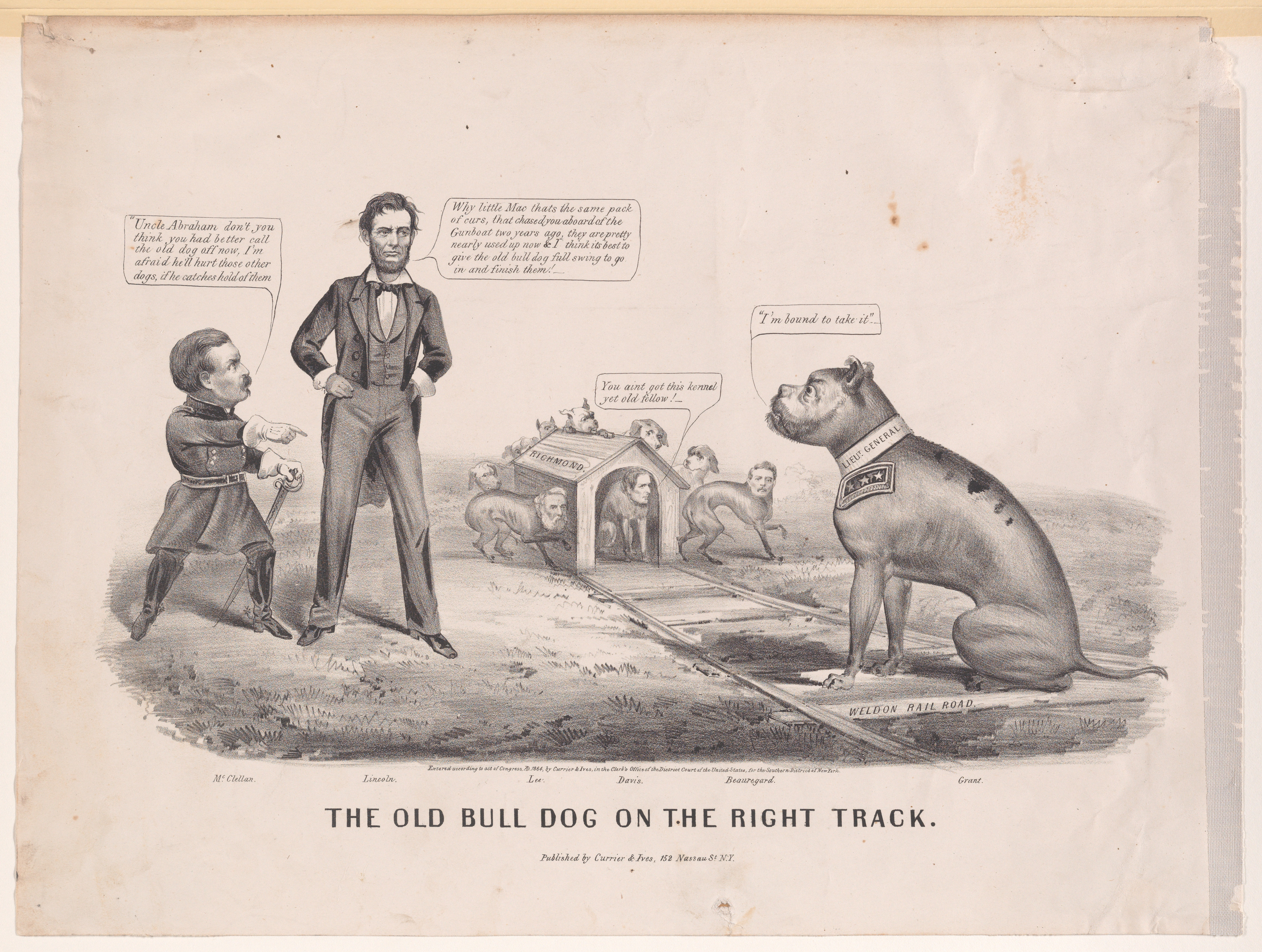
The Old Bull Dog on the Right Track
Currier & Ives|Robert E. Lee|General P. G. T. Beauregard|Ulysses S. Grant|General George B. McClellan|Abraham Lincoln|Jefferson Davis
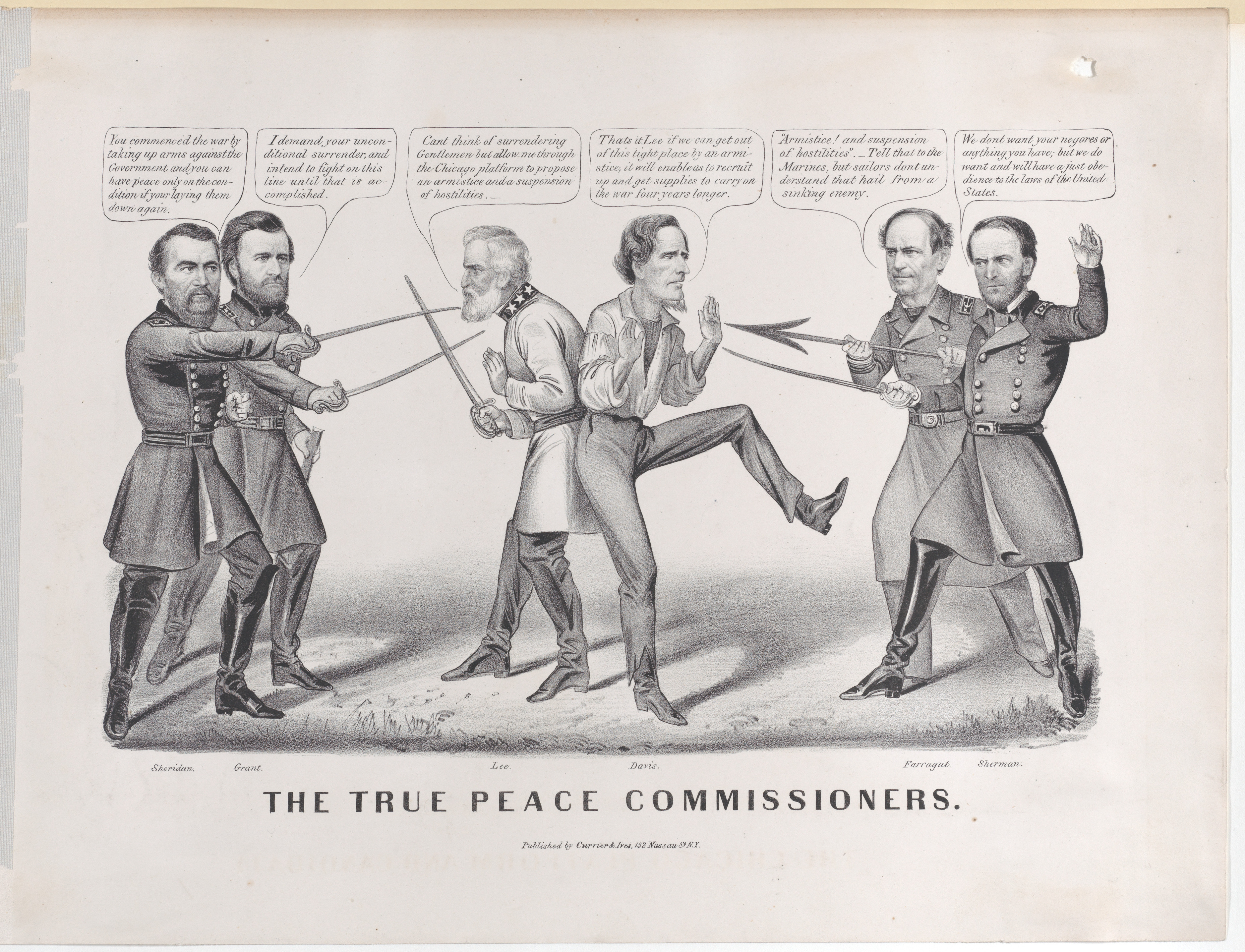
The True Peace Commissioners
Robert E. Lee|William Tecumseh Sherman|Abraham Lincoln|Major General Philip Henry Sheridan|David Glasgow Farragut|Jefferson Davis|Currier & Ives|Ulysses S. Grant
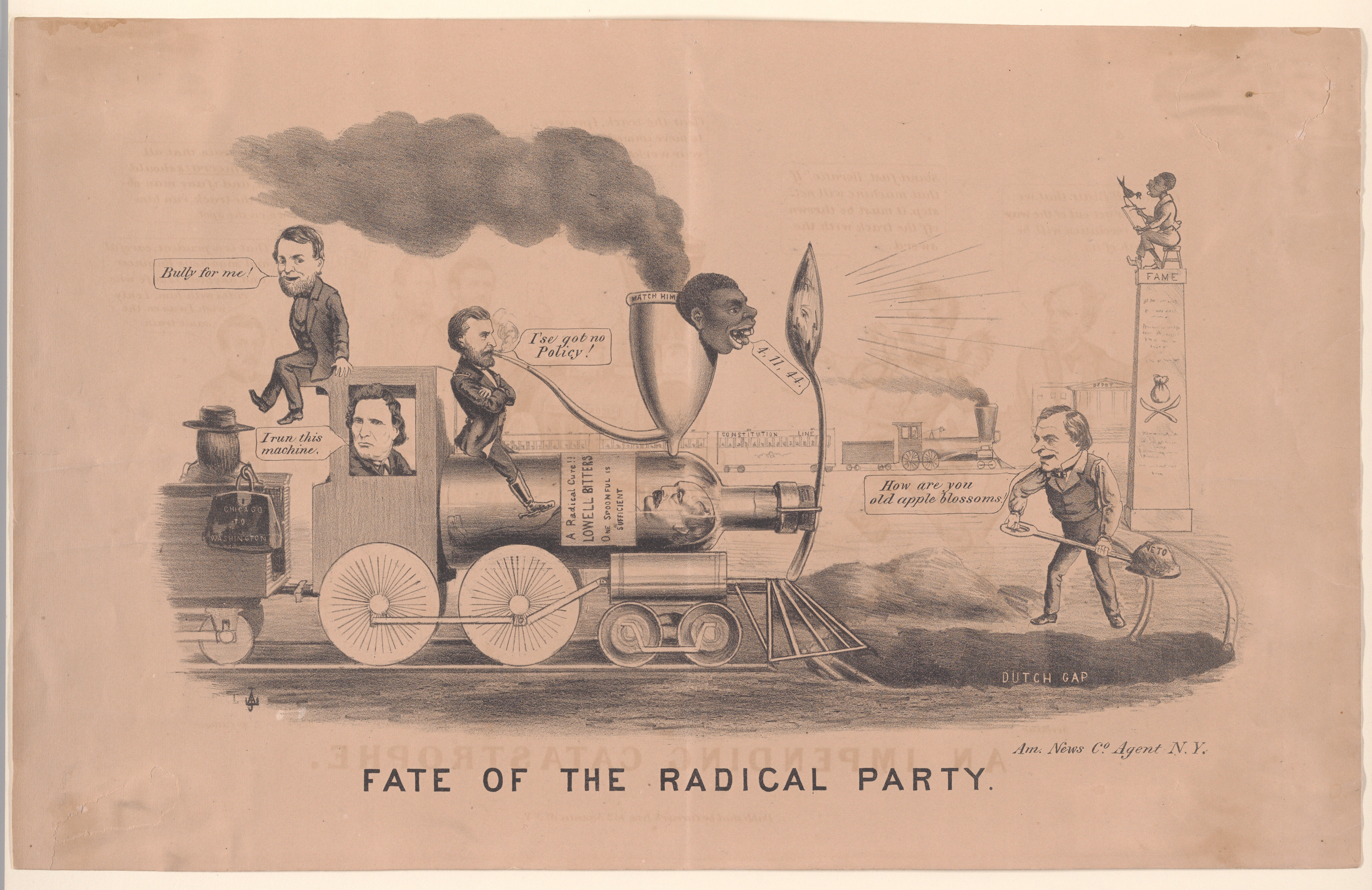
Fate of the Radical Party
Andrew Johnson|Schulyer Colfax Jr.|Benjamin Franklin Butler|Thaddeus Stevens|Ulysses S. Grant|The American News Co.|Currier & Ives
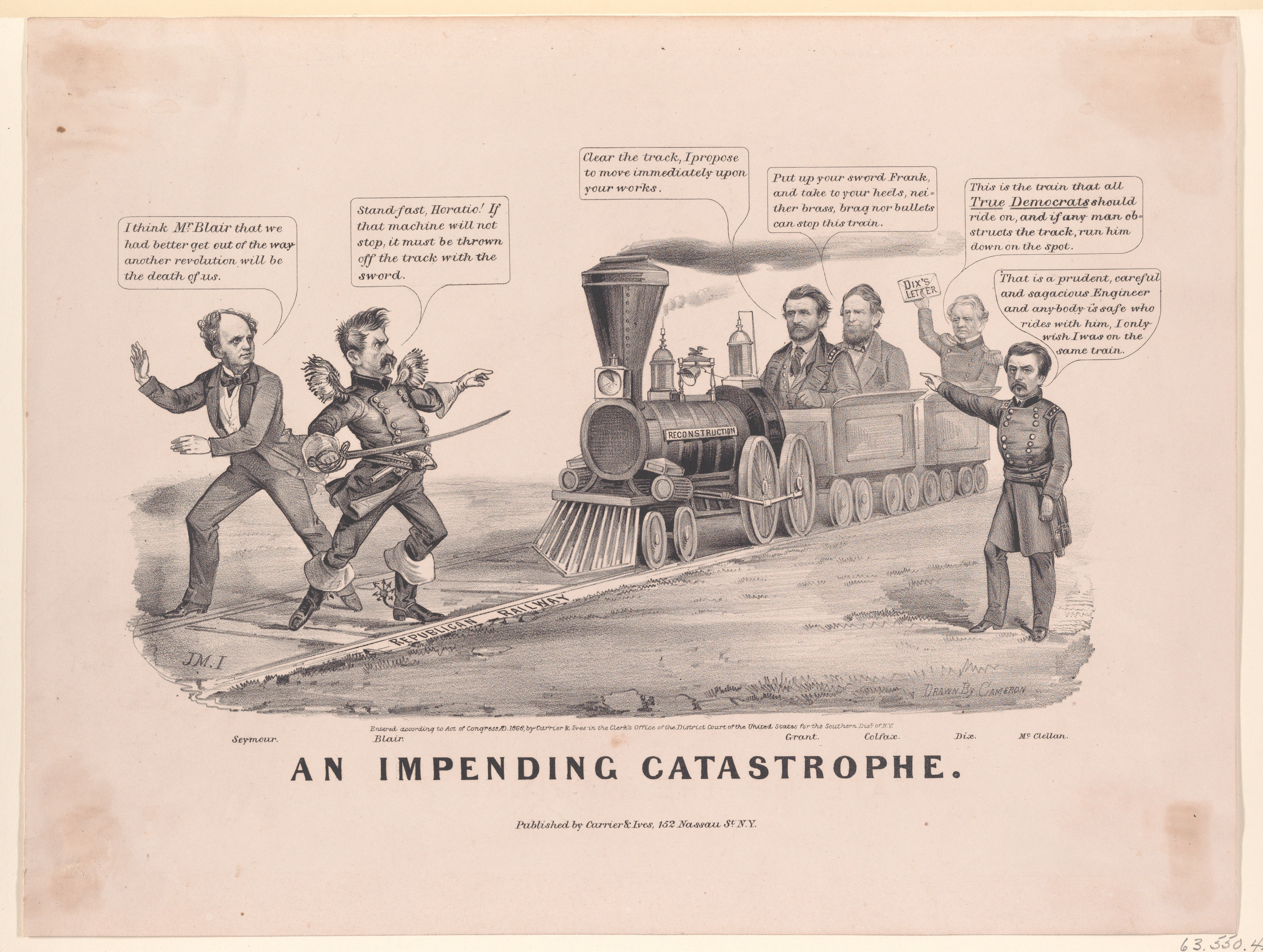
An Impending Catastrophe
Ulysses S. Grant|John Cameron|John Adams Dix|Horatio Seymour|James Merritt Ives|Schulyer Colfax Jr.|Currier & Ives|Francis Preston Blair Jr.

Hearth and Home
Pettengil, Bates & Co.|Edwin Austin Forbes|Nathaniel Orr|Ulysses S. Grant
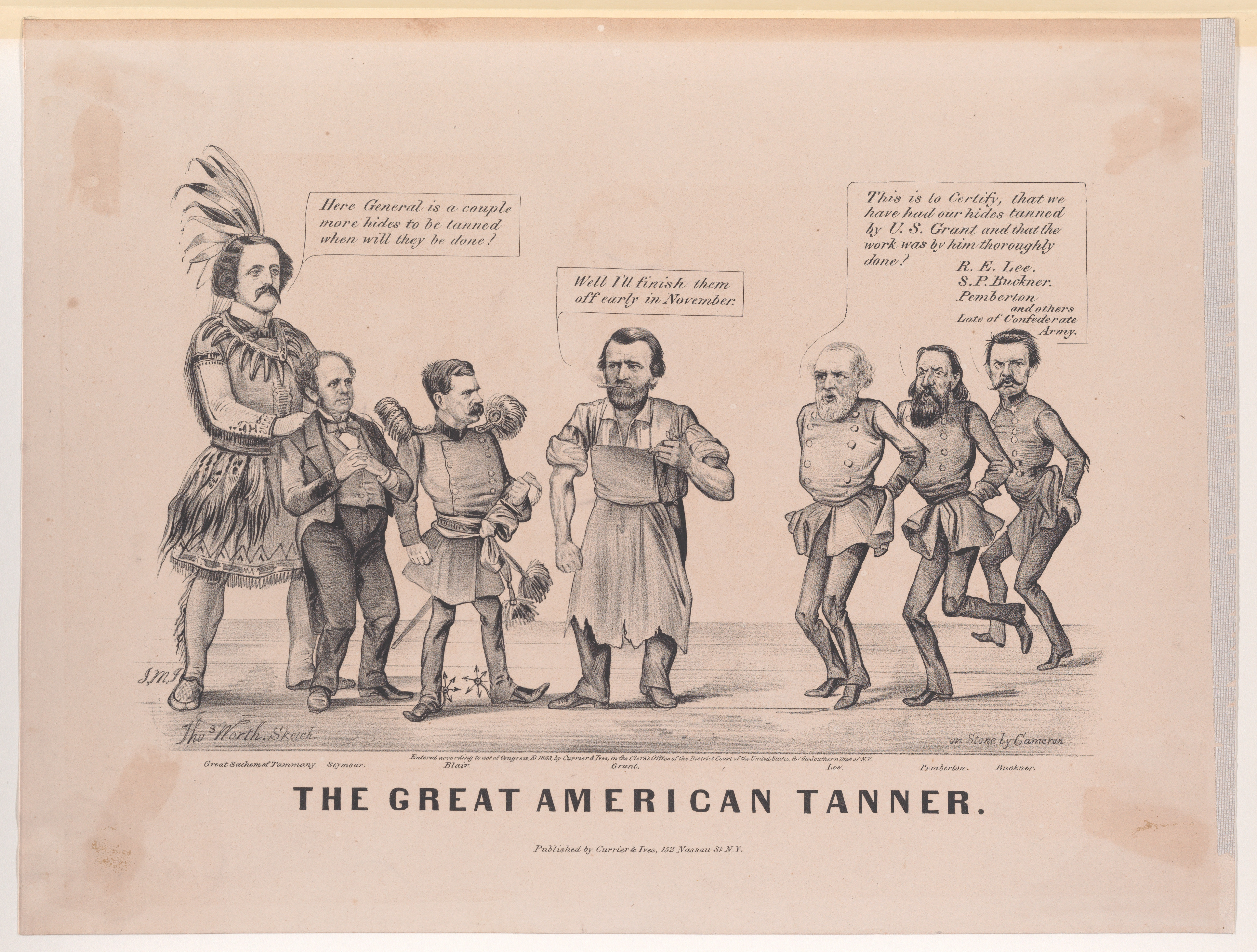
The Great American Tanner
John Thompson Hoffman|Ulysses S. Grant|Schulyer Colfax Jr.|Robert E. Lee|Simon Bolivar Bruckner|Horatio Seymour|John C. Pemberton|Currier & Ives|James Merritt Ives|John Cameron|Thomas B. Worth
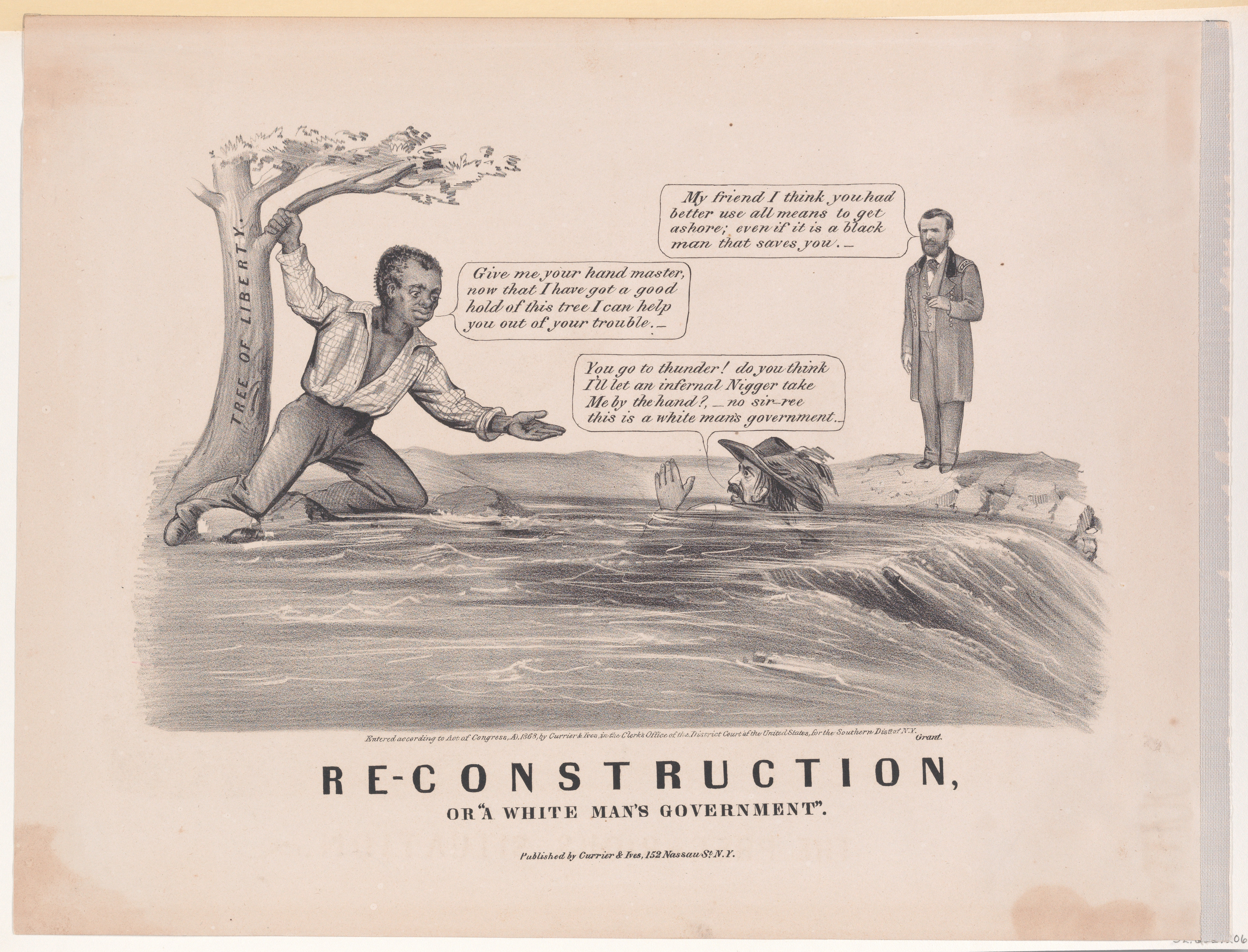
Re-Construction, or "A White Man's Govenment"
Currier & Ives|Ulysses S. Grant
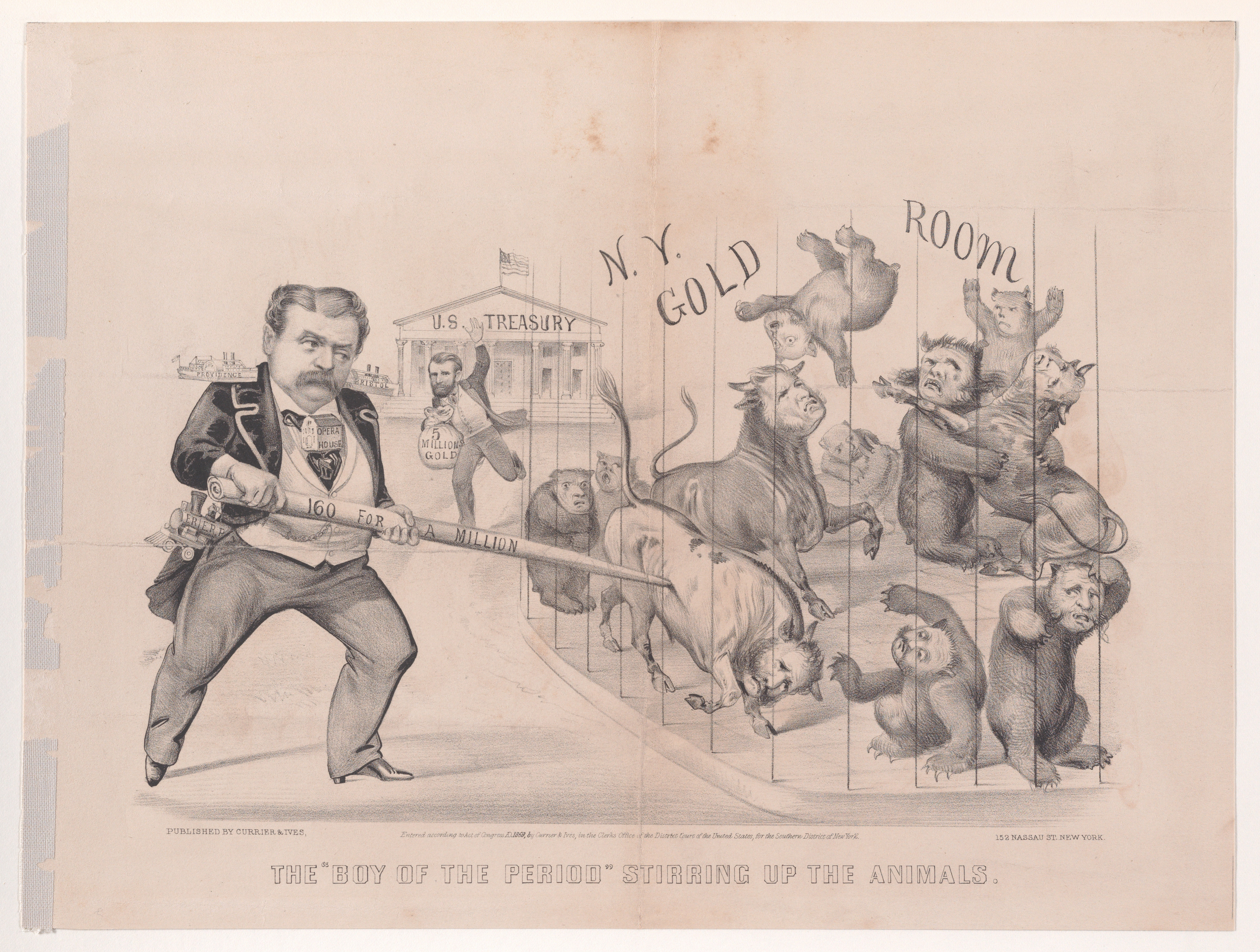
The "Boy of the Period" Stirring up the Animals
Ulysses S. Grant|Jay Gould|Currier & Ives

The Man of Words, The Man of Deeds, Which Do You Think the Country Needs?
Robert E. Lee|Horatio Seymour|Ulysses S. Grant|Currier & Ives|John Cameron|James Merritt Ives
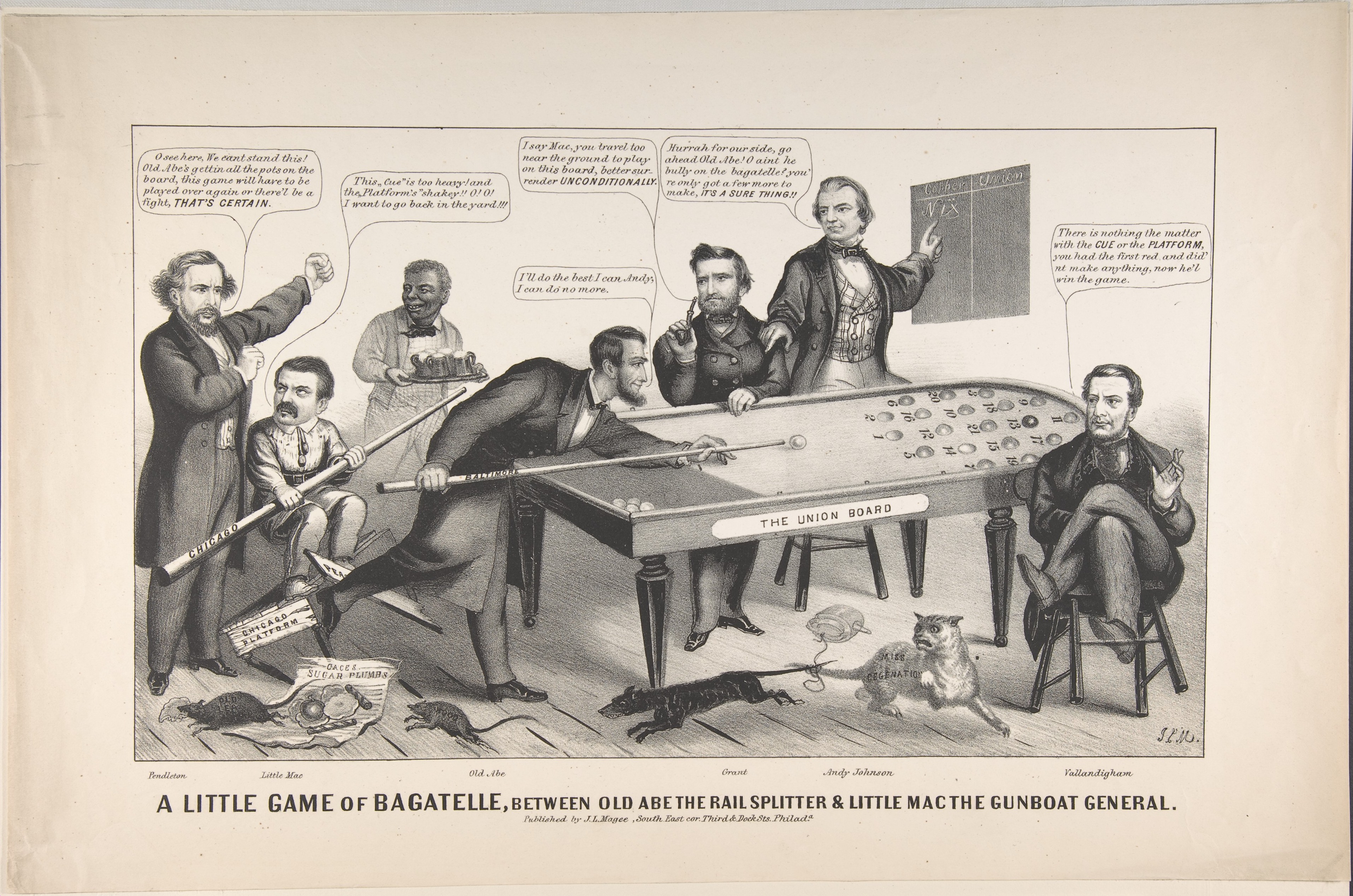
A Little Game of Bagatelle, Between Old Abe the Rail Splitter & Little Mac the Gunboat General
John L. Magee|Ulysses S. Grant|General George B. McClellan|Abraham Lincoln|Andrew Johnson
General Grant's unpublished correspondence in the case of Gen. Fitz-John Porter
General Grant, from 1 866 to 1 876, was successively General-in-Chief, Secretary of War, and President. While holding these positions appli- cations were made to the President by Fitz-John Porter for...
More from the Industrial Revolution


Explore what happened on the days that shaped Ulysses S. Grant's life. Today In History connects historical figures with the events, births, and deaths that defined their era. Browse all historical figures or explore today's events.